
Glendoick Environmental Policy
At Glendoick we believe that gardening is or should be an activity which is good for the environment. Plants are essential for bees, birds and other wildlife and add to the wellbeing of individuals and communities.
Glendoick Garden Centre strives to be Scotland's leading and most innovative garden centre in terms of environmental impact.
1. Electric charging points for cars
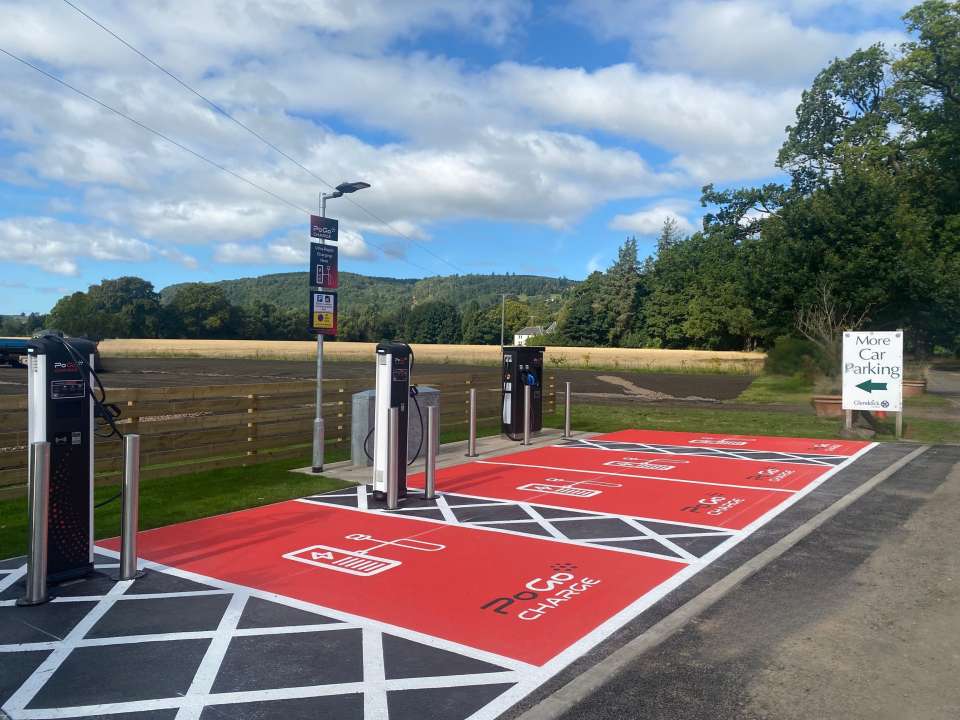
We’re pleased to offer PoGo Charge electric vehicle (EV) chargers on-site, making it easy to power up while you shop, dine, or explore the garden centre.
There are three chargers available, offering a range of connectors and speeds to suit every visitor’s needs:
-
50kW CCS/CHAdeMO with 22kW AC rapid charging
-
25kW DC charger
-
25kW DC charger
All chargers are part of the nationwide PoGo Charge network, providing fast, reliable service with simple contactless payment and compatibility with all EVs.
Whether you’re stopping by for a quick visit or a leisurely day out, you can charge your car and recharge yourself at Glendoick.
2. Installation of Solar Panels to reduce electricity consumption. Our solar array covers much of the total south and west facing roof. Glendoick can generate up to 100% of its electricity requirements when the sun shines.
3. Recycling of plastic pots. Some of Glendoick's major suppliers switched to taupe coloured pots rather than black pots which can be recycled. Perth and Kinross Council need to be persuaded to offer this locally and we are hopeful that the pilot projects underway in Worcestershire will roll out nationally. Please help us by asking Perth and Kinross council to recycle plastic plant pots.
4. Plastic packaging. Glendoick recycle plastics where ever possible and are looking at all opportunities to reduce the use of plastic packaging. We are looking to sell more and more loose (unpackaged) product. For example we sell 80% loose bulbs which are sold in paper bags rather than packaged bulbs in plastic wrappers.
Going forward all our major suppliers are being asked to audit their packing, recycling and waste.
Our major sundry supplier Westland has already implemented the required policy illustrated here.
5. Plants Source Locally
Unlike the Garden Centre chains like Dobbies who source little or no plant material from Scottish Growers, Glendoick grow many of their plants on site in their two nurseries. Our bedding plants are grown 3 miles away near Errol, our Heathers are grown locally, our Poinsettias from Edinburgh, Cyclamen from the Clyde Valley, perennials and alpines from near Inverness and so on.
6. Food
By sourcing local produce as much as possible, we cut down on food miles and support local farmers, growers and producers. We compost, recycle and have a bio-friendly septic tank.
7. Legal and National Guidelines
We will uphold the laws and regulations relating to the Environment, and also will respect its sensitivities.
We will work to reduce energy and resource consumption, adhering to industry and good practice and seek prevention of pollution at all times.
8. Recycling and Waste management
- Waste product management and a recycling policy will be pursued vigorously and we will fulfil obligations and, where possible advance initiatives in this area.
- All cardboard is recycled
- We have on site recycling for glass.
- We have a bio-friendly sewage treatment plant.
9. Timber Sourcing
Glendoick furniture is purchased, wherever possible only using sustainable timber: The Forest Stewardship Council (FSC).
What does FSC Mean?
- It means that the wood used in your furniture is extracted with minimal environmental impact.
- The FSC label guarantees that the trees that are harvested are replaced or allowed to regenerate naturally.
- Parts of the forest are protected entirely, in order to protect rare animals and plants.
- FSC is the only wood certification scheme endorsed by the major environmental charities, including WWF, Greenpeace and The Woodland Trust.
- FSC protects the rights of indigenous people to use the forest.
- The forest owner must use local workers to run the forest, and provide training, safety equipment and a decent salary.
- The FSC label is found on wood and paper products. All the wood used is tracked from the forest to the store. Every link between the forest and the consumer is certified to make it clearly identifiable which wood is FSC certified and which is not.